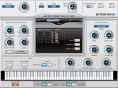
Auto-tune, in its most basic sense, is an online software that allows users to manipulate sound.
So how does it work?
The software uses a set reference point, such as a musical scale or specific notes. Anything that deviates from this reference point is then automatically corrected through the software. These corrections can be done to either make a voice sound “natural” by “tacking the voice smoothly back to the reference pitch. Or, artists can make the correction happen quickly and artificially, which results in the warbling, digitized voices now all the rage in pop, hip-hip, reggae and other types of music” (https://www.livescience.com/11046-auto-tune-work.html).





Those are the basics. Are you craving the nitty gritty science? Here is the explanation based on a physicist much more qualified than I on the subject:
“A digital signal uses discrete values rather than continuous ones, so converting an analogue signal requires taking sets of discrete points or samples. (Higher sampling rates more closely approximate the original sound)”.

The digital signals can then be altered to “correct” the note using a phase vocoder.
“It breaks an audio signal down into many small, overlapping frames and then changes the spacing of those frames to change the total duration of the sound. The sound is then resampled to take it back to its original duration and hit the desired note.”
http://www.physics.org/article-questions.asp?id=75
 . ,
. , Retuning Auto-Tune